
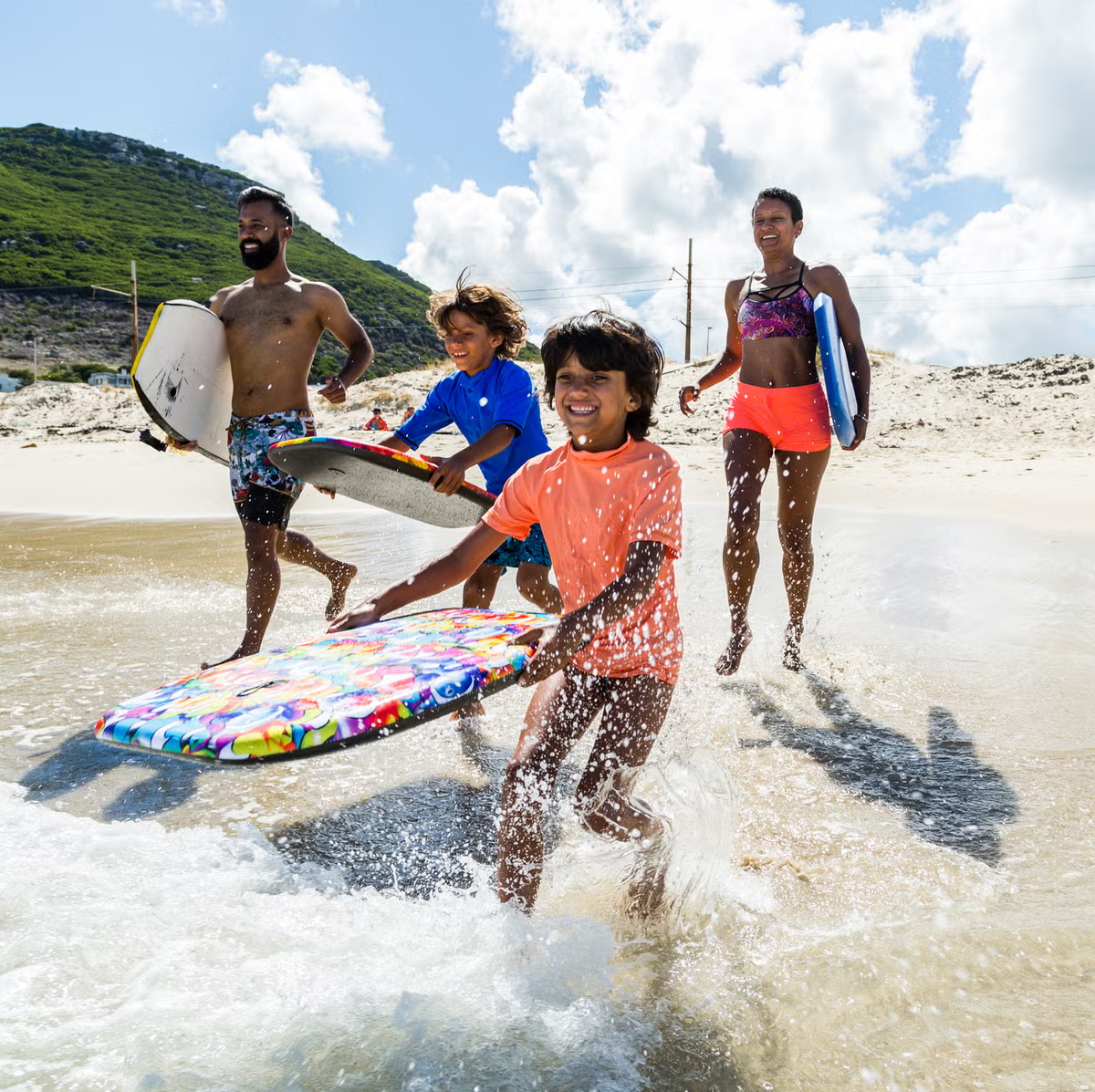

Anyone who’s travelled with children will tell you the same thing: family travel is not just adult travel with smaller humans added. It requires different planning, different priorities, different expectations — and a completely different definition of success.
A successful solo trip might mean an 18-hour travel day, five cities in ten days, and maximum cultural exposure. A successful family trip might mean two hours at a single beach, everyone eating the same thing, and getting back to the room before meltdown threshold.
Both are valid. Both are travel. But they need completely different approaches.
After years of travelling with kids of different ages, here’s what actually works — and the destinations in 2026 that genuinely deliver for families.
What Makes a Great Family Destination?
Before the list, it’s worth being specific about what we mean by “family-friendly.” It’s not just about having a kids’ club. The best family destinations tend to have:
- Variety of activity levels — so that the 6-year-old and the 14-year-old can both find something genuinely interesting.
- Manageable travel logistics — direct flights, short transfers, reliable transport between sites.
- Good food at multiple price points — not every night needs to be a restaurant; grocery stores and markets matter enormously.
- Safe public spaces — beaches, parks, pedestrian areas where kids can move freely.
- Something for adults too — because family travel works best when parents are also having a real holiday.
With those criteria in mind, here are the best family destinations for 2026.
Top Family Vacation Destinations for 2026
Japan — The Family Trip Everyone Is Surprised By
Japan has become one of the world’s most recommended family destinations, and parents who’ve taken the leap consistently report it was the best trip they ever did with their children.
Why? Because Japan is genuinely kind to families. It is extraordinarily safe, clean, and orderly. Public transport is easy to navigate. The food culture means that even picky eaters can usually find something (ramen, sushi, gyoza, tempura — few children resist). And the sheer variety of experiences — from Universal Studios Japan and teamLab digital art museums to active volcanoes and ancient temples — keeps multiple age groups genuinely engaged.
Tokyo’s Shinjuku Gyoen park is a half-day in itself. Kyoto’s Fushimi Inari shrine is walkable at the child’s pace with stopping points. Hiroshima’s Peace Memorial is one of the most moving and age-appropriate historical lessons available anywhere in the world.
Best ages: 5+. Best season to visit: Spring (cherry blossom, March–April) or Autumn (October–November).
Portugal — Europe’s Most Rewarding Family Destination
Portugal has quietly become one of Europe’s best family travel options, particularly for UK and northern European families. Flights are short and frequent, the weather is reliable, and the country combines beaches, history, and food into a package that works brilliantly for families.
The Algarve coast is the obvious choice — safe beaches, calm Atlantic waters in summer, good tourist infrastructure. But Lisbon with kids is also excellent: the tram rides, the castle, the aquarium, the pastéis de nata, and the sheer walk-ability of the city make it a wonderful urban family base.
Porto offers day trips to the Douro Valley, beach towns, and enough chocolate shops to keep younger visitors very interested.
Costs are lower than much of Western Europe, food is excellent and child-friendly, and locals are genuinely warm toward families with children.
Best ages: All ages. Best season: June–September for beaches; March–May or September–October for city travel.
Bali, Indonesia — Budget-Friendly and Genuinely Magical for Families
Bali has been on the family travel radar for years, but its appeal in 2026 is stronger than ever. For families travelling from South and Southeast Asia, Australia, or on a budget from Europe, it combines enormous value with experiences that children remember permanently.
Rice terraces, monkey forests, Hindu temples, volcanic hikes, surf lessons, and cooking classes make for an activity mix that serves children of almost every age. Ubud in particular has developed excellent family infrastructure — cooking schools for kids, craft workshops, guided nature walks.
The beach towns of Seminyak and Canggu have calmer waters and family-focused resorts, and while Bali’s traffic is a real logistical challenge, hiring a private driver for the duration of your stay (remarkably affordable) solves this almost entirely.
Best ages: 4+. Best season: April–October (dry season).
Greece — Islands and History in Perfect Balance
Greece works brilliantly for families because of its combination of accessible history, beautiful beaches, and reliable Mediterranean weather. It’s also easy to get to from most of Europe with short flight times and multiple direct connections.
The Greek islands serve different family types well. Crete is excellent for beach families — long sandy beaches, calm waters, good resort infrastructure alongside genuine Minoan history at Knossos. Rhodes offers medieval history (the old town is extraordinary), reliable sun, and calm beaches. The Cyclades — Naxos, Paros — are quieter and better for families who want fewer tourists.
Athens as a city break is underrated for families: the Acropolis is genuinely compelling for older children, the Panathenaic Stadium tells a great Olympic story, and the street food culture (souvlaki, spanakopita, loukoumades) delights children of every age.
Best ages: All ages. Best season: May–June or September–October (avoiding peak July–August crowds and heat).
Canada — Wide Open Spaces and Child-Friendly Cities
Canada is the perfect destination for families who want both outdoor adventure and excellent urban experiences without significant language or culture shock. It’s also one of the world’s safest travel destinations.
Vancouver is an extraordinary base — walking distance to beaches, mountains, and Stanley Park, one of the world’s great urban green spaces. Whistler is a day trip away. The Pacific Spirit Regional Park has accessible trails through old-growth forest. The Capilano Suspension Bridge is terrifying and brilliant in equal measure.
The Canadian Rockies (Banff, Lake Louise, Jasper) remain one of the world’s most spectacular landscapes, and guided family hikes, horseback riding, white-water rafting, and glacier experiences are all well-catered for.
For families interested in wildlife, the Pacific coast offers whale watching, and British Columbia has one of the world’s best opportunities to see bears in a guided, ethical context.
Best ages: All ages. Best season: June–September for outdoor activities; November–March for winter sports.
Practical Tips That Make the Difference
Book accommodation with a kitchen. Even one week of cooking some of your own meals will save significant money and — more importantly — give you flexibility for picky eaters, early dinners, and the evenings when everyone is too tired for a restaurant.
Plan for two speeds. Every family has someone who wants to do more and someone who needs to slow down. Build a mix of active days and genuinely lazy days into every trip. The lazy days are often the ones children remember most fondly.
Involve children in planning. Even young children can be given real choices: do you want to see the castle or the aquarium this morning? That ownership significantly reduces resistance and complaint.
Research child entry prices. Many major attractions have substantial family discounts, and some — like many UK National Trust properties, Japanese national parks, and numerous European museums — are free for children under certain ages.
Accept that the trip will not go entirely to plan. The hotel won’t be exactly as pictured. Someone will get a stomach upset. The beach you wanted will be closed. Family travel is partly about modelling for your children that surprises and setbacks are manageable. The trips that go slightly wrong often become the best stories.